

Opening or upgrading a restaurant requires careful planning, and one of the most important aspects is selecting the right commercial kitchen equipment. The efficiency, hygiene, and productivity of a kitchen depend greatly on the quality and layout of its equipment. Choosing the correct equipment not only improves workflow but also helps reduce operational costs and ensures food safety standards are met.
Understand Your Kitchen Needs
Before purchasing any equipment, restaurant owners should clearly understand their kitchen’s operational needs. Different types of restaurants require different equipment setups. For example, a fast-food restaurant may need high-capacity fryers and warming stations, while a fine-dining restaurant may focus more on precise cooking equipment and preparation tables.
It is important to analyze your menu, cooking methods, and daily serving volume. Once these factors are identified, you can determine the types of equipment required for food preparation, cooking, storage, and cleaning.
Prioritize Stainless Steel Equipment
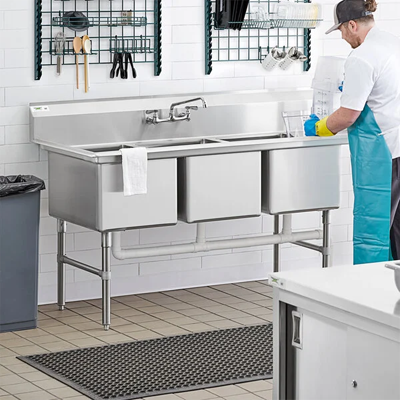
Stainless steel is widely used in commercial kitchens because of its durability, corrosion resistance, and hygienic properties. Equipment such as stainless steel worktables, sinks, shelving units, and dish cabinets help maintain a clean and professional kitchen environment.
Stainless steel surfaces are easy to clean and resistant to bacteria buildup, which is essential for food safety. In addition, stainless steel equipment can withstand heavy daily use and high temperatures commonly found in commercial kitchens.
Choose Efficient Cooking Equipment
Cooking equipment is the core of every kitchen. Restaurants should select equipment that provides both efficiency and reliability. Modern induction cooking equipment has become increasingly popular in professional kitchens because it offers fast heating, energy efficiency, and precise temperature control.
Compared with traditional gas stoves, induction cooking equipment produces less heat in the kitchen environment, helping maintain a more comfortable workspace for chefs. It also improves safety by eliminating open flames.
Ensure Proper Food Storage and Organization
An organized kitchen improves workflow and reduces preparation time. Stainless steel shelving units and dish cabinets help store ingredients, utensils, and cookware efficiently. Proper storage systems keep the kitchen tidy and allow staff to easily access the tools they need during busy service hours.
Food warmers and display warmers are also essential in restaurants that serve large volumes of prepared food. These devices keep food at the correct temperature while maintaining its taste and quality.
Focus on Durability and Maintenance
Commercial kitchens operate for long hours every day, so equipment must be able to withstand constant use. High-quality materials, strong construction, and reliable heating systems ensure equipment lasts longer and requires less maintenance.
It is also important to choose equipment that is easy to clean and maintain. Smooth stainless steel surfaces, removable components, and simple control systems make daily cleaning more efficient and help maintain hygiene standards.
Consider Custom Kitchen Solutions
Every restaurant has a different kitchen layout. Custom-designed equipment can maximize the use of available space and improve workflow efficiency. Professional kitchen equipment manufacturers often provide design consultation and customized production services to meet specific project requirements.
Customized solutions may include tailored worktables, shelving systems, and cooking equipment designed to match the exact dimensions and operational needs of the kitchen.
Conclusion
Selecting the right commercial kitchen equipment is essential for the success of any restaurant. By focusing on durability, efficiency, hygiene, and proper storage solutions, restaurant owners can create a functional and productive kitchen environment. High-quality stainless steel equipment, efficient cooking systems, and well-organized storage areas all contribute to smoother operations and better food service performance.